Wet Hulled
A technique unique to the Indonesian archipelago: short fermentation, half drying, hulling while wet, then drying again to 12–13%.
CharacterHeavy body, chocolate, spice
From Farm to Buyer
Eight stages from highland farm to a sack ready to ship. Quality can be gained or lost at each one, so we skip none of them.
01The journey of a bean
Scroll to follow one bean: from the partner farm and the ripe cherry, through the farmer group that collects it, to green coffee that is moisture-checked and bagged.
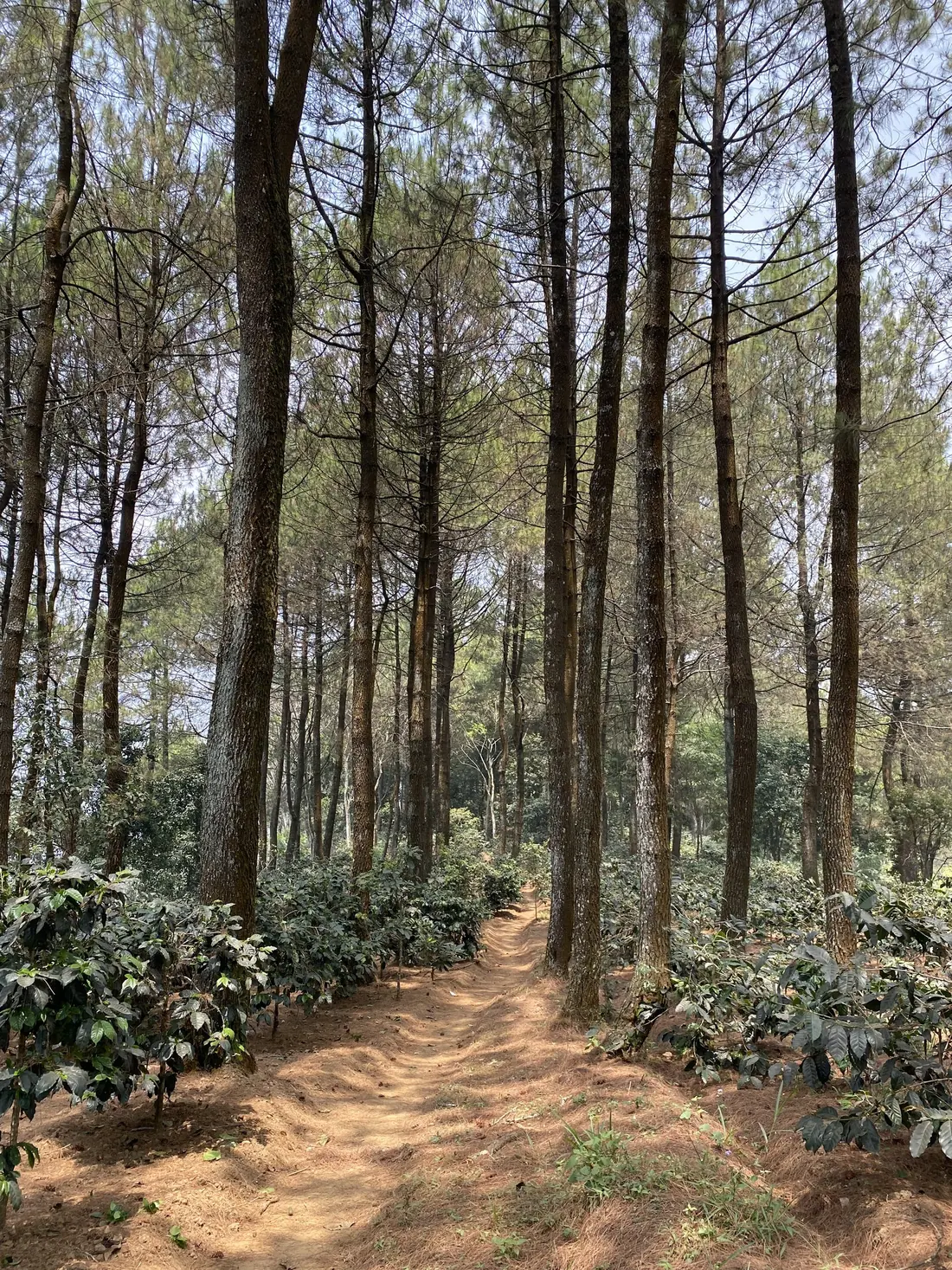


Our coffee is grown by more than 400 partner farmers across Garut, in Dano village (Leles district) and on other slopes such as Mandalawangi. Each tends around 2 hectares on average at 1,000–1,600 m, much of it under the shade of pine trees.
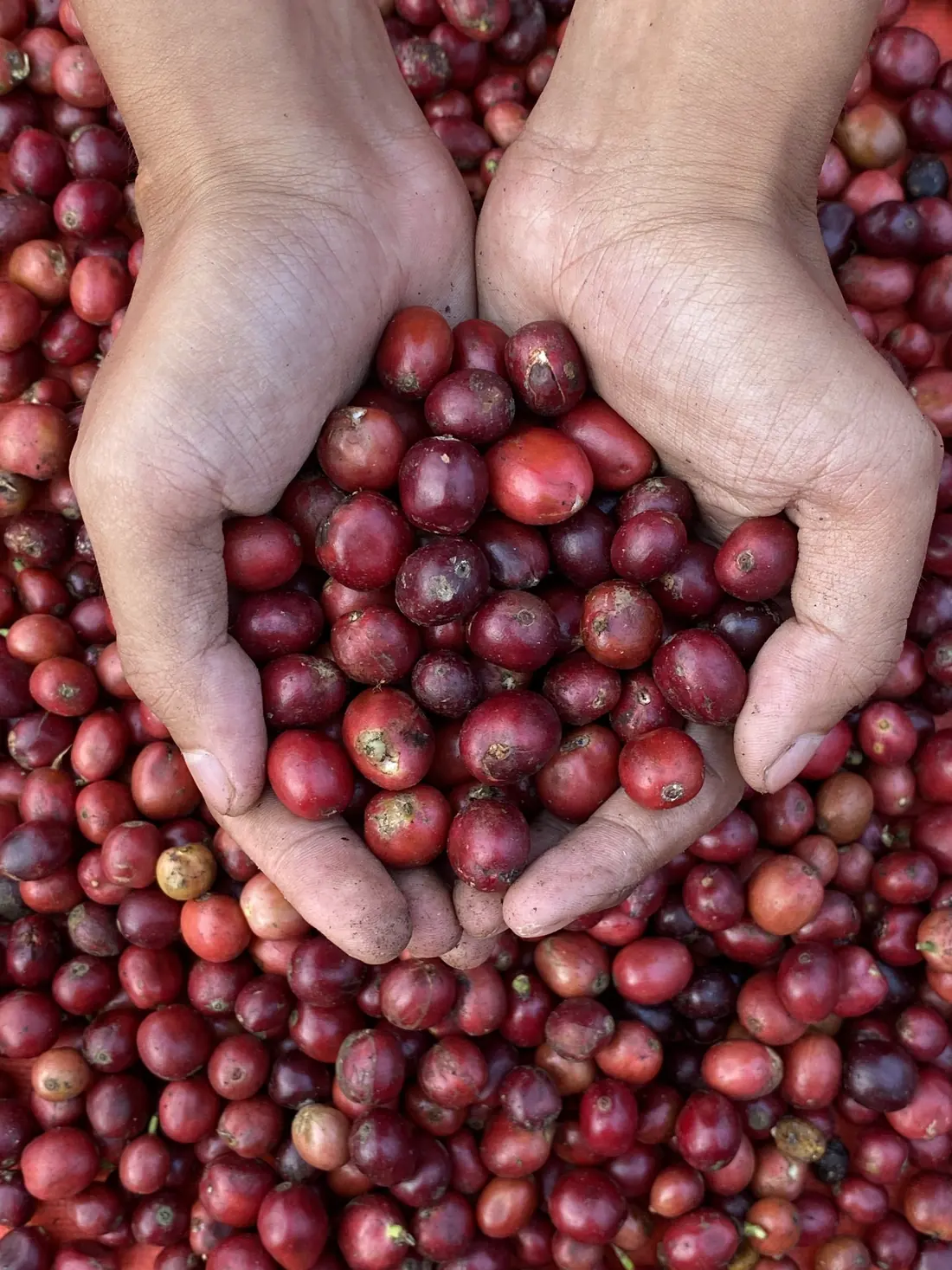
1,000–1,600 maslThe coffee trees flower white before the fruit sets and slowly ripens red. The Arabica harvest peaks in June and the Robusta harvest in August.
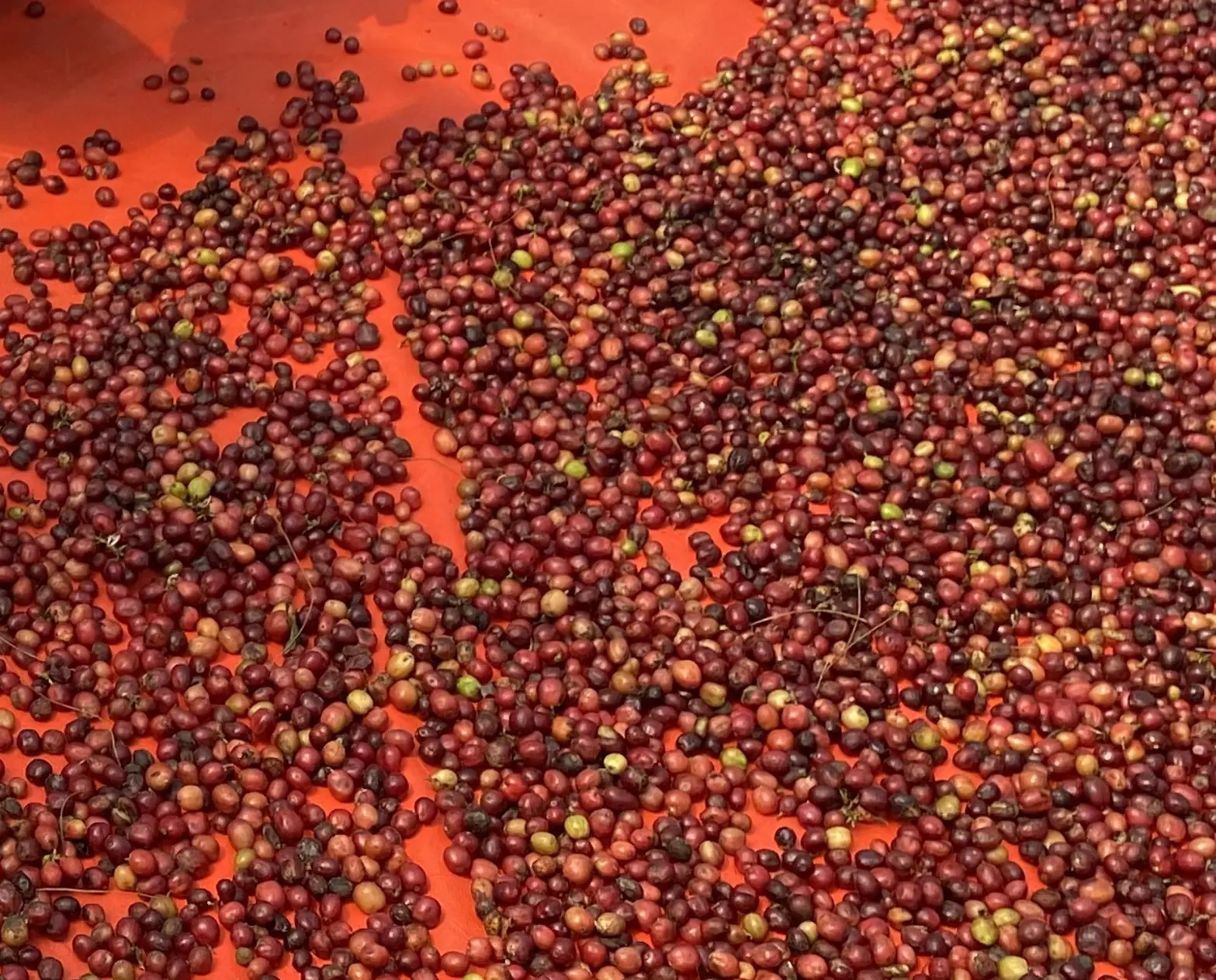
Harvest: June & AugustCherries are picked when fully red and ripe. Before processing they are sorted: damaged or unripe fruit is removed, and for the fully washed process the cherries are floated and the floaters taken out.
Ripe cherries onlyEach farmer’s harvest is gathered by a collector or farmer-group leader and passed on to Amirah. Each coffee has its own method: wet hulled (a short 6–12 hour fermentation), fully washed (12–24 hours, then washed three times) or natural (the whole cherry is dried).
Per processNatural and fully washed coffees are dried on raised beds for 10–14 days to 11–12% moisture. Natural cherries must be turned 2–3 times a day to prevent mould. Wet-hulled coffee is dried twice: half-dry before hulling, then down to 12–13% afterwards.
10–14 daysOnce dry, the coffee is hulled. The beans then go through the suton to separate defects, and are hand-sorted again on bamboo trays before packing.
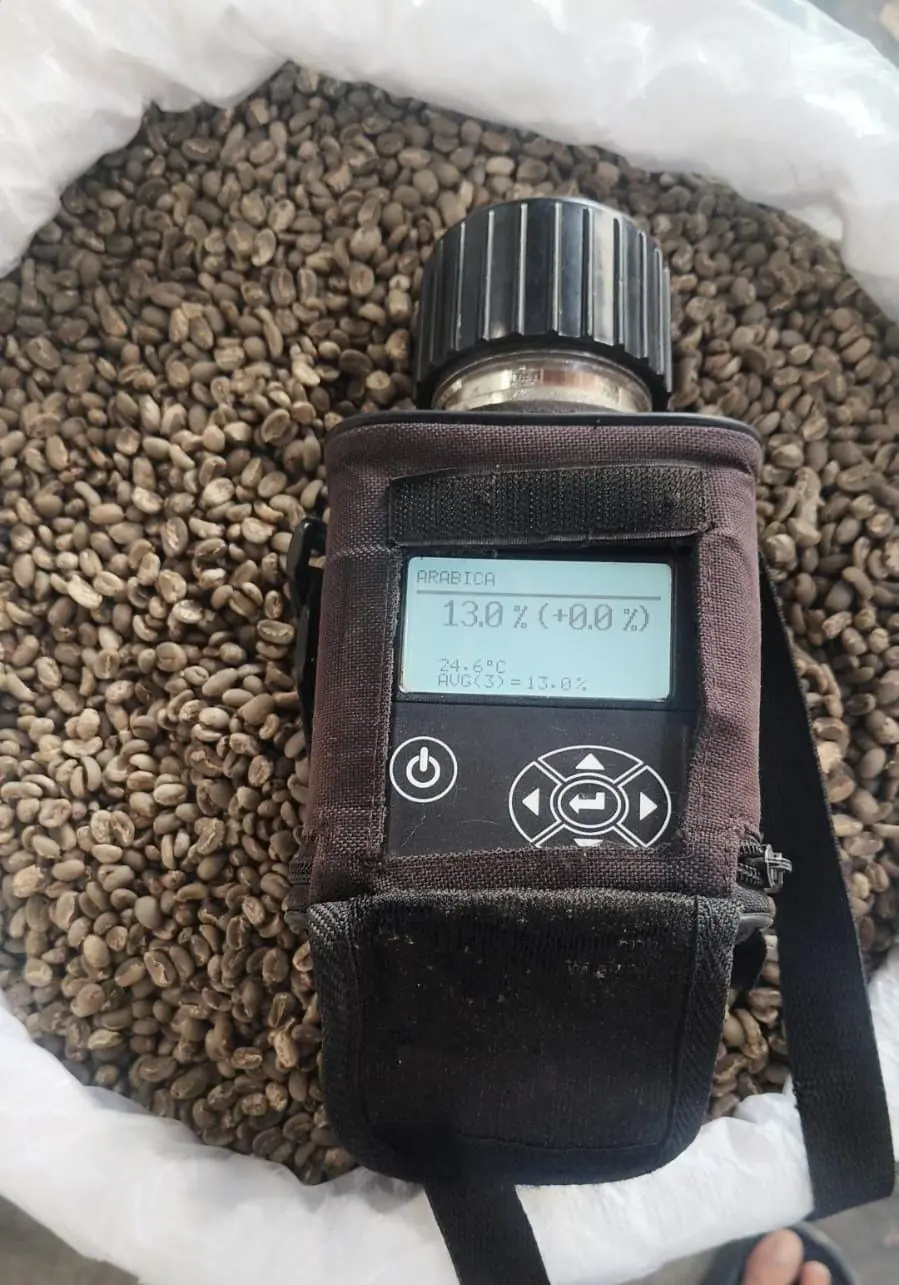
Defects max. 5%Green bean moisture is measured with a moisture meter: around 13% for wet-hulled Arabica and 12% for the other coffees. Controlled moisture keeps the beans stable in storage and transit.
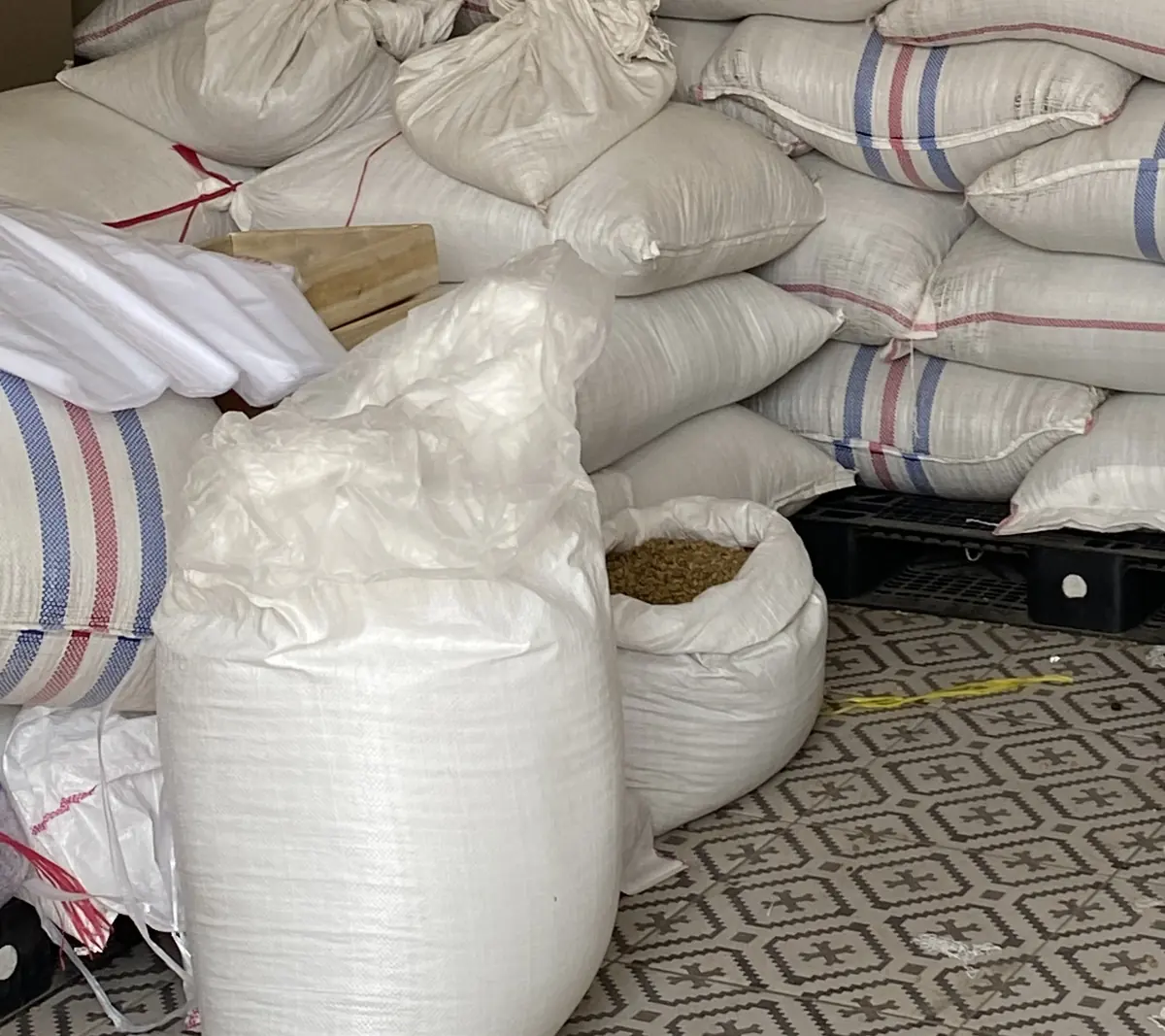
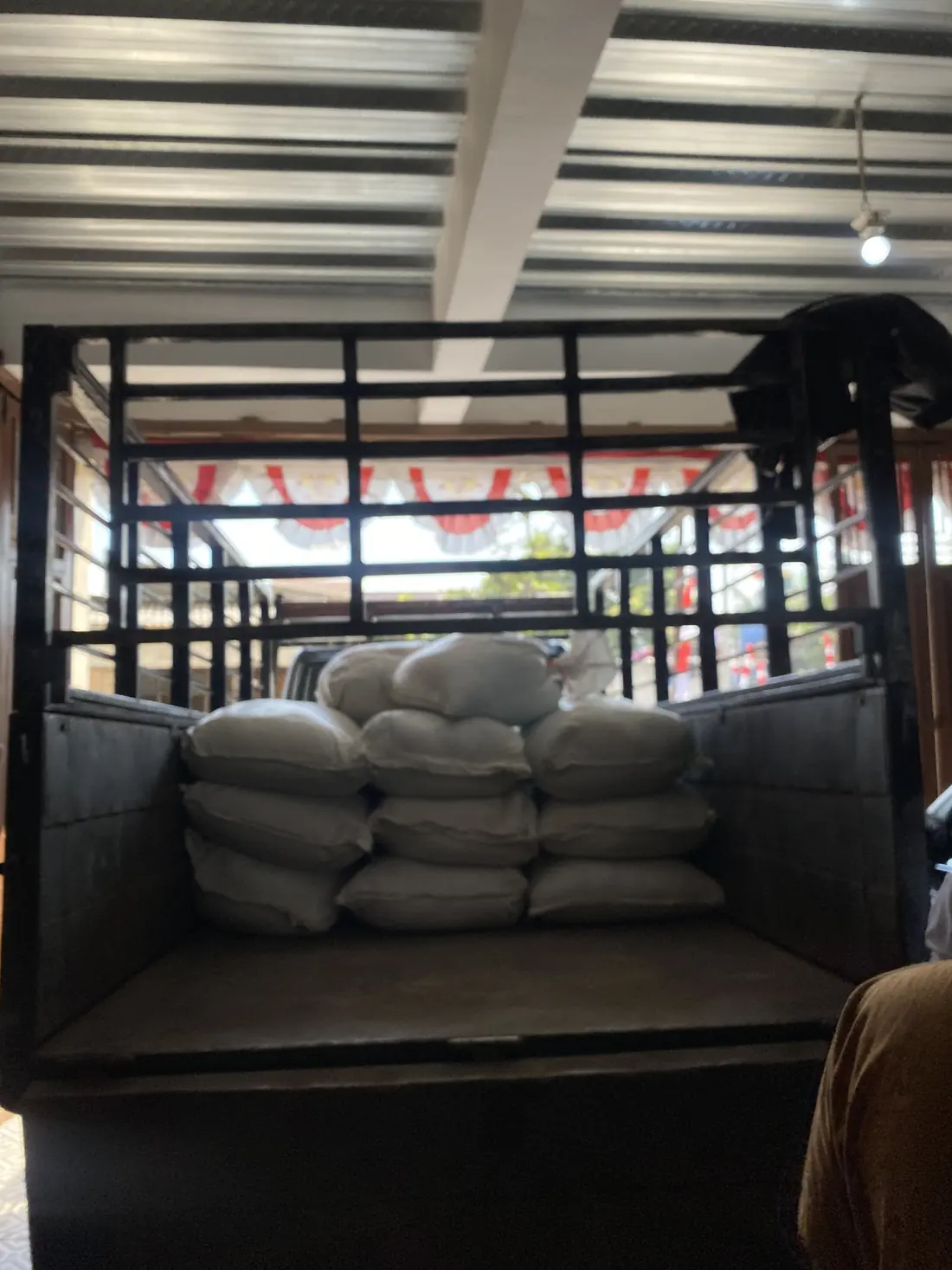
12–13%Green coffee is packed in 60 kg jute bags, with inner lining on request, and shipped from the port of Tanjung Priok on FOB or CIF terms.
FOB / CIF02Uniquely Indonesian
In other methods the parchment is removed only once the bean is dry. In wet hulling the coffee is only half-dried, and the parchment comes off while the bean still holds 30–40% moisture. That soft, wet bean is what creates the heavy body and bluish-green colour typical of Indonesian coffee.
| Aspect | Wet hulled | vs Fully washed |
|---|---|---|
| Parchment removed | While the bean is still wet (30–40%) | After drying (11–12%) |
| Fermentation | Short, 6–12 hours | 12–24 hours in water tanks, then washed 3 times |
| Drying | Two stages: half-dried in parchment, then the naked bean down to 12–13% | One stage on raised beds, 10–14 days |
| Bean appearance | A distinctive bluish green | Clean and even |
| In the cup | Heavy body, low acidity, chocolate and spice | Clean, bright acidity, fruit and floral |
Following our processing steps. Individual lots may vary slightly.
03Processing methods
How coffee is processed after picking shapes much of its flavour. Each of our coffees represents one method.
A technique unique to the Indonesian archipelago: short fermentation, half drying, hulling while wet, then drying again to 12–13%.
CharacterHeavy body, chocolate, spice
The cherry is pulped, fermented for 12–24 hours and washed three times, then the beans dry on raised beds before the parchment is removed.
CharacterClean, bright, fruit and floral
The cherries are dried whole, skin and fruit intact, on raised beds for 10–14 days, turned 2–3 times a day, before hulling.
CharacterFruity, winey, complex
Only maroon-red Robusta cherries are picked, then dried whole, natural style, and hulled.
CharacterBold, nutty, low acidity
→Next step
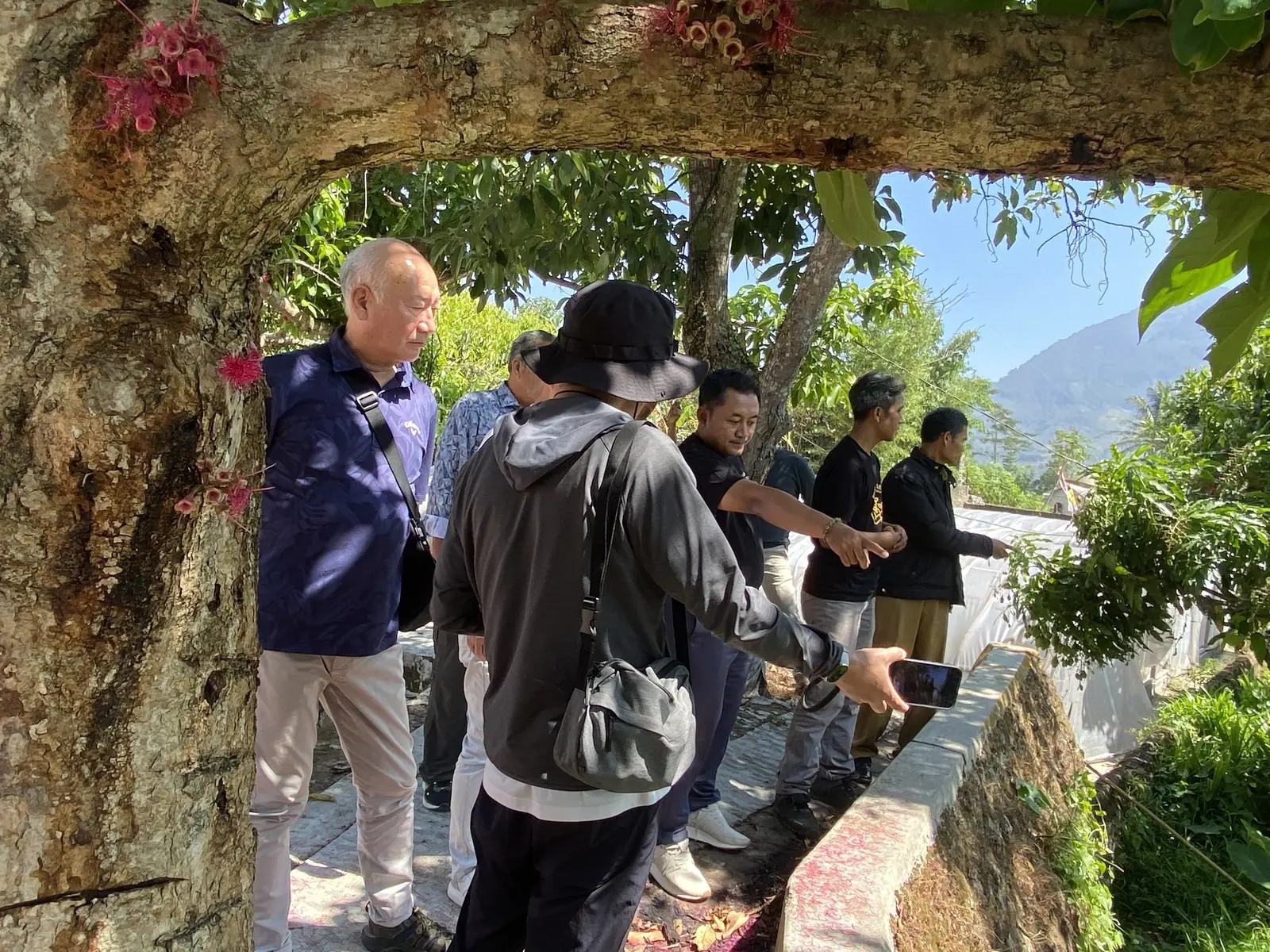
We welcome visitors, from buyers and researchers to government delegations. Get in touch to arrange a visit.